
Utilizing Geomembranes for Harsh Climates: A Case Study
As climates shift and extremes intensify, HDPE and LLDPE geomembranes have become essential. These engineered polyethylene barriers control seepage, isolate contaminants, and stabilize infrastructure while resisting UV, temperature swings, chemicals, wind, and settlement. They often serve as the primary environmental control in heap leach pads, tailings, brine and process‑water ponds, wastewater lagoons, and aquaculture systems, and must deliver decades of service with little maintenance. Material choice hinges on climate and exposure: HDPE brings high tensile strength and long‑term chemical resistance; LLDPE offers superior flexibility and low‑temperature performance—decisive when liners are uncovered and weather‑exposed.
Recognizing Challenges of Extreme Climates
Extreme climates demand liners that manage both heat and cold. Desert heat drives expansion; arctic cold can cause stiffness and brittleness. Rapid day–night swings create contraction/expansion cycles, wrinkles, and stress near seams and penetrations. Solar loading elevates surface temperature well above ambient, accelerating oxidation and stress cracking if stabilization is weak. Subfreezing conditions reduce polymer mobility and complicate handling and welding; without adjustments, seams suffer. According to blog.sai.la , installation temperature strongly influences performance and life. Good practice schedules work to avoid peaks, stages materials to limit thermal shock, and tunes welding parameters to weather. Wind uplift, frost heave, and high‑altitude UV reinforce the need for smooth subgrades, adequate ballast or cover, and anchorage designed for worst‑case loads.
Characteristics of Geomembranes in Climate Resilience
Climate‑resilient performance stems from flexibility, chemical resistance, and tensile strength. As huitex.com notes, HDPE withstands acids, salts, and hydrocarbons common in industrial fluids. Textured surfaces raise interface friction on slopes. Additives—carbon black for UV shielding and antioxidants for oxidative stability—protect polymer chains for long service. High stress‑crack, puncture, and tear resistance help liners survive handling and settlement. LLDPE’s greater elongation improves cold‑weather toughness and conformance to uneven subgrades and penetrations, reducing localized strain. Together these traits let systems be tuned to each project’s demands.
- Thermal Resistance: HDPE and LLDPE retain strength and seam performance across wide temperatures. Properly stabilized, they maintain properties even when solar loading drives surfaces far above ambient. Designers address thermal expansion with anchor trenches, controlled slack, and deployment sequencing to limit wrinkles. In hot‑fluid uses like heap leach pads and brine ponds, thermal resistance limits creep under head pressure and preserves weld continuity.
- Flexibility in Cold Conditions: LLDPE’s flexibility limits cold‑induced stress and brittleness near and below freezing. It promotes tight subgrade contact, reduces bridging, and lowers puncture risk when frost heave or ice lenses form. Crews handle panels more easily, with less preheating and fewer seam irregularities—key where winter windows are short and winds strong.
Real-World Implementation Success Stories
From high‑UV deserts to polar sites, success pairs the right material with smart detailing and disciplined CQA. The examples below summarize proven responses shaping today’s specifications.
Desert Mining Operations
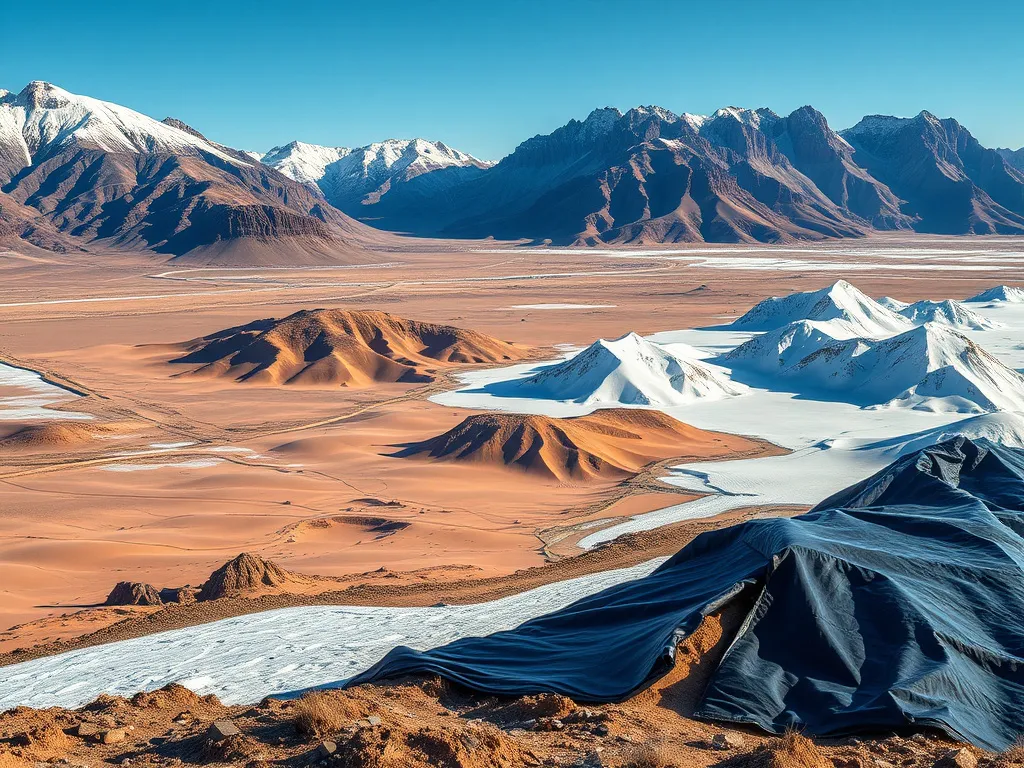
In deserts, controlling thermal expansion and contraction is paramount. Crews install liners with planned slack and weld during cooler hours to reduce residual tension. Textured liners boost slope friction; geotextile cushions protect angular subgrades; drainage layers shed heat and relieve uplift. Dust control prevents welding defects, and temporary ballast counters wind. Numbered panels and sequenced laydown limit exposure before seaming. Anchors are sized for predicted movement, and perimeter details avoid stress concentrations.
At Saudi Arabian heap‑leach sites, polyethylene geomembranes installed with controlled slack maintained integrity despite large daily swings source . Facilities paired HDPE primaries with secondary containment and leak detection. Seaming at dawn and dusk, dual‑track wedge welding, and continuous air‑channel testing verified continuity. Vacuum‑box checks of repairs and targeted spark testing added assurance. Result: barriers that tolerated >30°C daily deltas, sandstorms, and intense UV while remaining compatible with acidic solutions and stable on steep, loaded slopes.
Arctic Construction Projects
In Arctic work, LLDPE is preferred. As highlighted by xrgeomembranes.com , arctic liners with very low cold‑crack temperatures have protected Alaskan drilling sites from puncture and chemicals.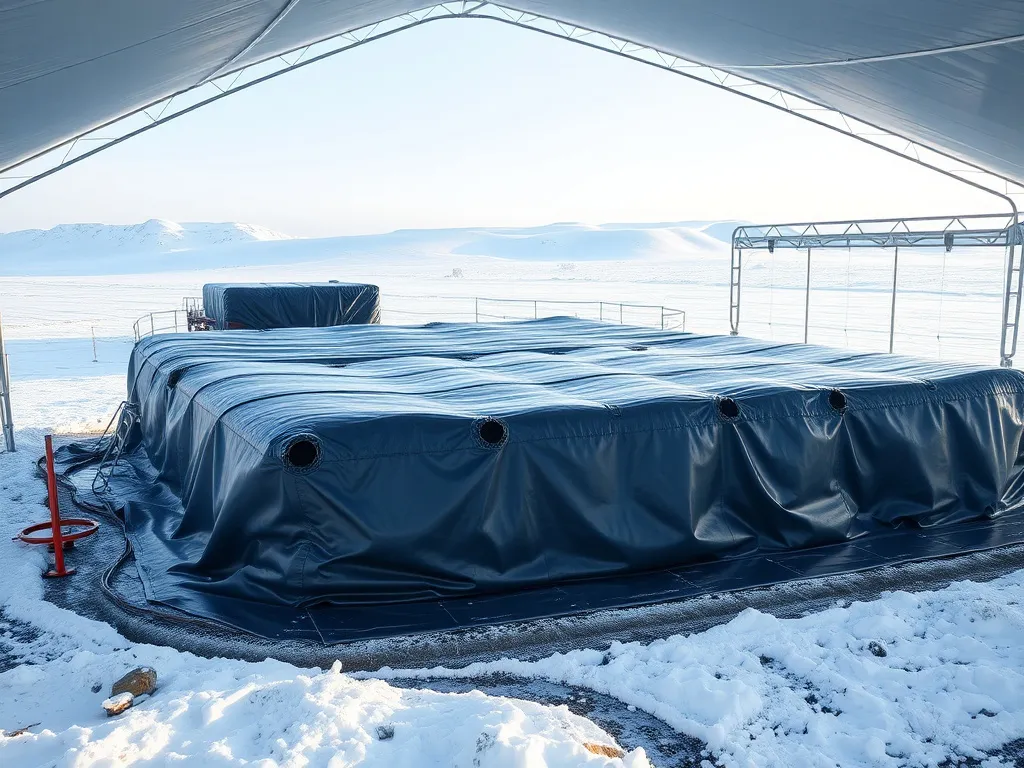 Deployment uses heated shelters for seaming, preheated overlaps, and strict moisture control. Subgrades consider permafrost dynamics and may include insulation or geocomposites to limit thaw settlement. In secondary containment, LLDPE conforms around sumps, pipes, and boots without overstressing tight corners. Post‑winter inspections address ice abrasion, seam condition, and ballast after snowmelt. With materials that retain elongation and tear resistance in the cold, facilities have remained leak‑free across multiple seasons with minimal repair.
High-Altitude Aquaculture
At high elevations, geomembranes enable aquaculture by providing UV‑resistant, impermeable barriers. Smooth, cleanable surfaces help maintain water quality, while reinforced perimeter and inlet/outlet details resist ice, hail, and storm waves. Because UV increases with altitude, black or light‑colored co‑extruded skins with strong UV stabilizers protect polymers and manage surface temperature. Underliner geotextiles cushion rocky subgrades, and robust anchorage stabilizes liners during freeze–thaw and rapid drawdown—reducing seepage, supporting biosecurity, and making scarce‑water sites viable.
Comparative Analysis with Competitors
Competitors like Megaplast serve broad markets, but GPF emphasizes extreme‑climate resilience. Strategic carbon‑black loading boosts UV resistance and life—a priority highlighted by geosyntheticsmagazine.com for high‑temperature systems. Antioxidant packages extend oxidative induction time; high stress‑crack resistance and tight thickness control prevent localized strain. GPF’s co‑extrusion tailors surfaces—textured for friction, conductive for electrical leak location, and color‑tuned for solar management. Reliable supply, factory quality testing, and responsive technical support reduce risk where construction windows are short and environmental stakes high.
- Strength over Standards: GPF products exceed GRI‑GM13 with elevated stress‑crack and oxidative stability—vital for exposed liners facing repeated thermal cycles. Factory QC verifies dimensional stability, puncture and tear resistance, and weldability across representative temperatures. Owners gain fewer delays, more reliable seams, and lower life‑cycle costs in aggressive climates.
- Customizable Solutions: Tailored options target climate challenges: light‑colored skins to cut heat gain, high‑friction textures for steep slopes, and conductive backings for fast, precise leak location on exposed or covered systems. Project‑specific roll widths and prefabricated panels reduce on‑site seaming in cold or wind. Guidance on anchors, ballast, and protection layers helps integrate products into the broader geosynthetic system while balancing constructability, performance, and cost.
Lessons Learned and Future Perspectives
These cases reinforce matching material to climate and application. Field experience elevates comprehensive CQA: sound subgrade prep; controlled deployment to manage wrinkles; logged welding parameters; and systematic non‑destructive testing (air‑pressure tests of dual seams, vacuum box checks, and spark testing on conductive liners). Integrated systems—geomembranes with cushion geotextiles, drainage geonets, GCLs, and protective covers—distribute loads, manage heat, and limit construction damage. Electrical leak location surveys at commissioning and during operation catch defects early. Looking ahead, co‑extruded functional layers, stronger antioxidant/UV packages, and digital QA workflows will further harden systems. Sustainability is reshaping products: lower embodied carbon, responsible recycled content, and environmental product declarations align liners with climate goals. Emerging uses—high‑salinity brines, PFAS‑impacted waters, and geothermal fluids—are driving formulations that retain mechanical performance under heat and aggressive chemistries without sacrificing durability.
Conclusion
Using geomembranes to meet extreme‑climate demands is both technical necessity and environmental responsibility. As GPF advances polyethylene liner technology, projects gain higher performance, longer life, and operational efficiency. With careful product selection, climate‑aware detailing, disciplined installation, and proactive monitoring, owners can build containment that endures daily cycles, seasonal extremes, and decades of exposure—improving protection and uptime while lowering total ownership cost. Amid climatic uncertainty, resilient geomembrane systems provide a proven way to safeguard resources, communities, and infrastructure.