
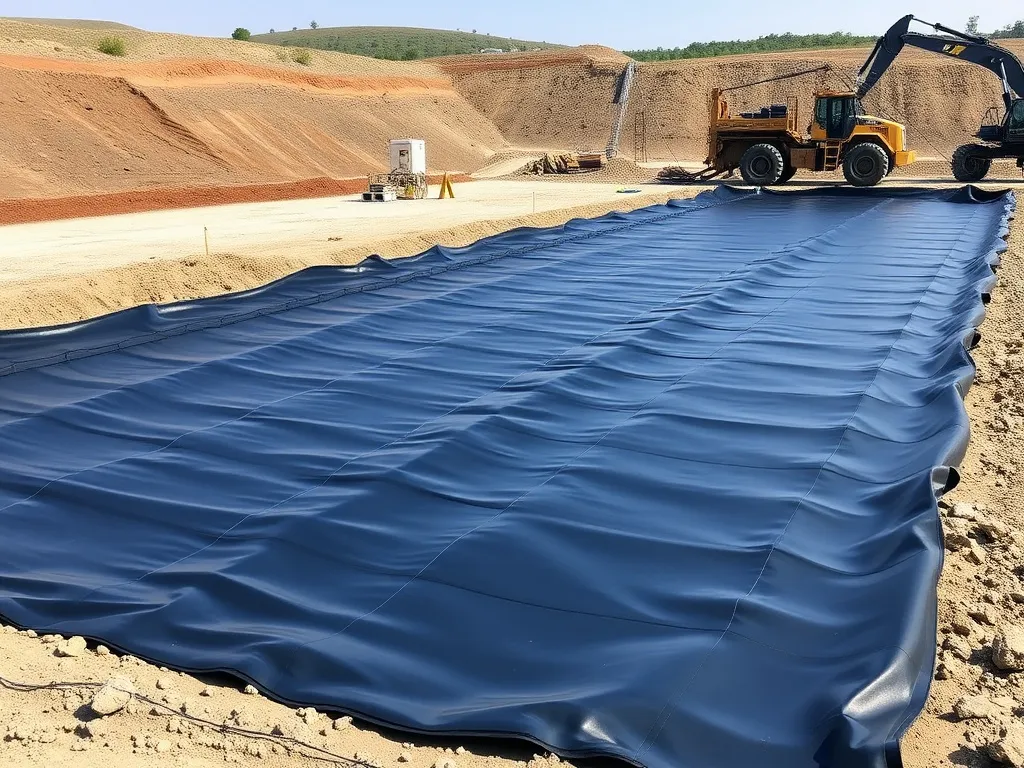
Chemical Resistance of HDPE Geomembranes in Engineering Practice
In civil and environmental engineering, High-Density Polyethylene (HDPE) geomembranes are essential containment materials. Valued for broad chemical resistance, toughness, and weldability, they are used from landfill liners to industrial waste systems.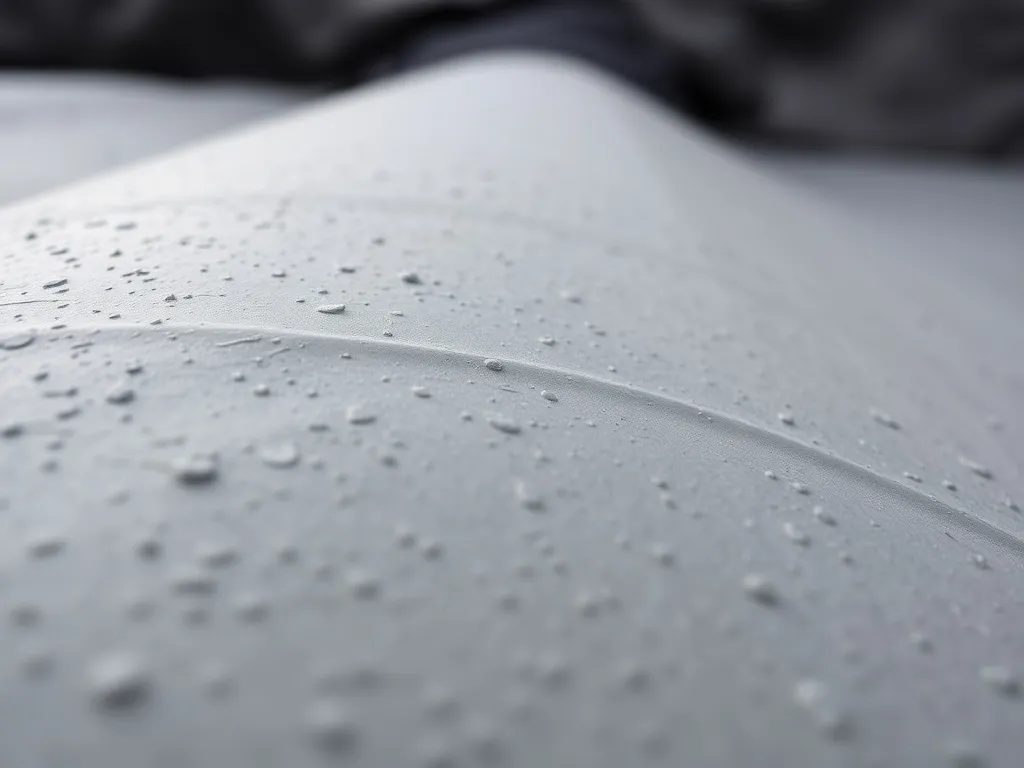 UV stability—typically via carbon black—supports long-term outdoor service, enabling exposed applications such as evaporation ponds, heap leach pads, and secondary containment at tank farms.
This article reviews HDPE chemical resistance, its roles across industries, degradation modes, and practical steps for durability. It also notes limitations, field examples, and when to select alternative liners or composites. By connecting materials science, standardized testing, and field experience, it helps designers and operators make confident, evidence-based choices.
The Significance of Chemical Resistance in HDPE Geomembranes
HDPE geomembranes provide effective barriers to diverse chemicals, directly influencing service life and environmental protection. Mining, chemical processing, and waste treatment routinely handle aggressive mixtures, making compatibility central to design and permitting. Strong resistance supports regulatory compliance, reduces liability, and protects groundwater by limiting contaminant migration.
HDPE’s resistance stems from its dense, semi-crystalline structure, which limits permeability and slows diffusion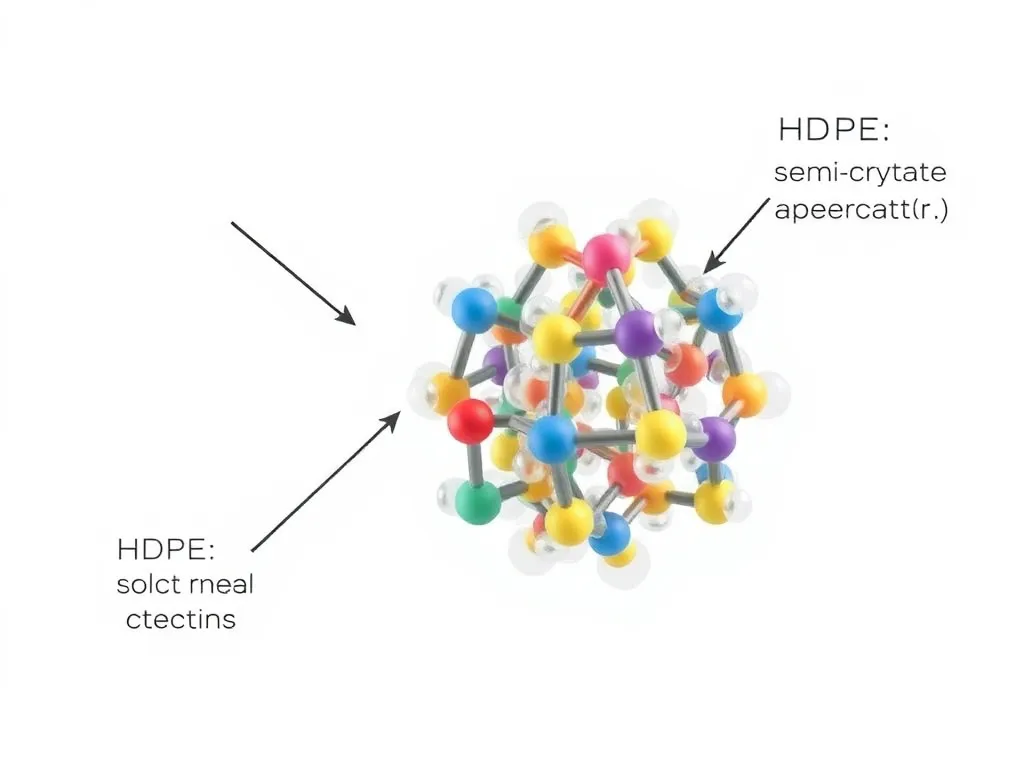 , while amorphous regions provide toughness and weldability. Formulations with carbon black and antioxidants maintain properties under chemical and environmental exposure when mechanical stresses remain within limits. Compatibility must always be considered alongside mechanical demands such as settlement, slope stability, and seam integrity.
Mechanisms of Chemical Resistance in HDPE Geomembranes
Understanding how chemicals interact with HDPE over time clarifies short-term wetting or swelling versus longer-term oxidative or stress-induced failures.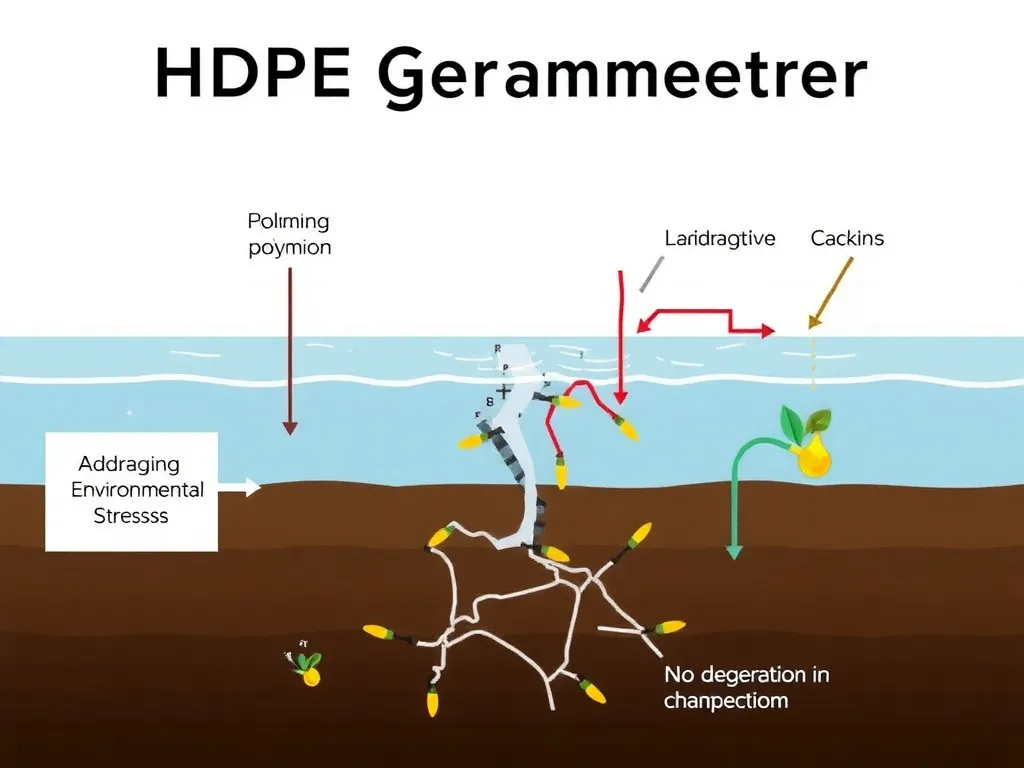 Multiple mechanisms can operate simultaneously, with temperature and stress accelerating damage. HDPE is highly resistant but not impervious; service life depends on the rate of penetration or degradation and should be accounted for in design.
- Permeation and Swelling: High crystallinity restricts permeation by many chemicals. Diffusion depends on molecular size, polarity, and solubility parameter; nonpolar organics are more mobile than salts, and aromatic or chlorinated solvents are especially aggressive. Limited swelling can reduce stiffness and strength, increasing deformation or crack initiation under load. Mitigation includes greater thickness in high-flux scenarios, composite barriers, and limiting exposure duration through operations.
- Oxidative Degradation: Heat or oxidizers can break polymer chains, weakening the liner. Antioxidants slow this process, and their content and retention are critical; Oxidative Induction Time tests assess protection. Property loss can precede visible embrittlement or discoloration, so monitoring is essential. Strong oxidizers—concentrated nitric acid, ozone, high-strength hypochlorite—may overwhelm antioxidant protection and require special caution.
- Environmental Stress Cracking (ESC): Chemical agents combined with mechanical stress can cause slow crack growth. Residual stresses from manufacturing or seaming and point loads from subgrade irregularities raise local stress intensity. Surfactants can worsen ESC by aiding fluid ingress at flaws. Selecting appropriate resins, easing stress concentrators, and avoiding sharp bends help mitigate ESC in active chemical environments.
Factors Influencing Chemical Resistance
Although HDPE generally offers excellent resistance, performance depends on the chemicals involved, exposure duration, and operating conditions like cycling and pressure. For exposed liners, UV and thermal cycling, and for all sites, freeze–thaw and drainage conditions, can interact with chemical effects and must be included in compatibility assessments.
- Chemical Concentration and Mixture Effects: Mixtures can behave more aggressively than their components. Surfactants lower surface tension and increase wetting, accelerating permeation or ESC. Oxidants and dissolved organics may interact; modest levels can be manageable, while higher concentrations or temperatures can drive rapid property loss. When compositions vary, test realistic best- and worst-case conditions.
- Temperature: Higher temperatures accelerate reactions and permeation (Arrhenius behavior). Consider peak as well as average temperatures—solar heating of exposed liners, heat from biological or chemical reactions, and operational excursions. Thermal expansion and contraction also alter stress at seams and details, compounding chemical effects under cycling.
- Surface Stress: Installation or operational stresses can exacerbate chemical attack by initiating microcracks and facilitating ingress. Scratches, wrinkles, and subgrade protrusions act as stress raisers. Proper subgrade preparation, cushioning geotextiles, and careful handling reduce local stresses and preserve chemical resistance in service.
Testing and Standards for Chemical Resistance
Predicting HDPE compatibility typically begins with standardized tests. ASTM D5322 (immersion) and ASTM D5747 (permeation) assess behavior under specific exposures. Long-term durability is evaluated via antioxidant depletion (e.g., Oxidative Induction Time by DSC) and tensile property retention after aging. Environmental stress cracking resistance is screened using notched constant tensile load tests. Specifications like GRI GM13 set baseline resin, carbon black, dispersion, and mechanical criteria for quality control. Field verification commonly includes electrical leak location surveys and stringent seam testing (non-destructive and destructive) to confirm as-installed barrier performance.
| Waste Fluid Type | Concentration Range | Compatibility |
|---|---|---|
| Sulfuric Acid | up to 50% | Excellent |
| Nitric Acid | up to 10% | Limited |
| Hydrochloric Acid | up to 20% | Excellent |
Applications and Case Studies
HDPE geomembranes are widely used in mining to line heap leach pads, protecting against low-pH sulfuric acid solutions for metal extraction.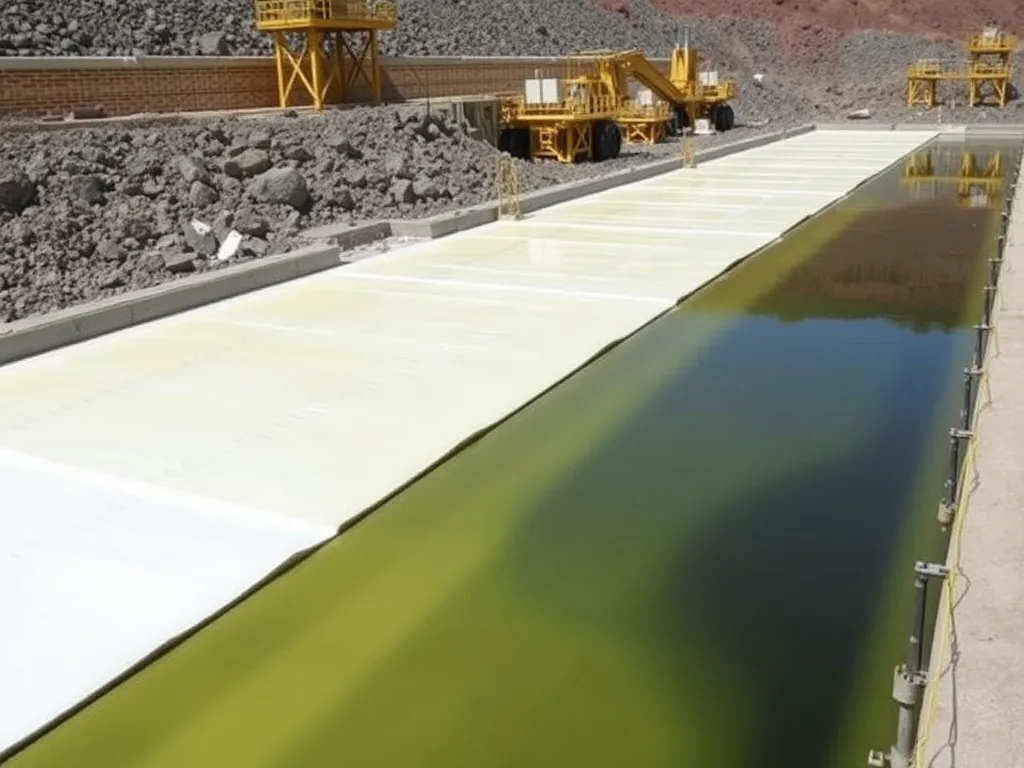 In chemical processing facilities, they serve as secondary containment for aggressive acids and caustics. Municipal solid waste landfills rely on HDPE as the primary liner in double systems to contain leachate rich in ammonia, salts, and VOCs. In gold mining, alkaline sodium cyanide solutions are compatible with HDPE when paired with robust drainage and slope-stability design. Fertilizer storage and transfer areas use HDPE-lined containment for urea–ammonium nitrate solutions, and refineries deploy HDPE-lined berms around tanks to meet spill-prevention requirements. Evaporation ponds at desalination plants, agricultural wastewater lagoons, and biogas reactors further demonstrate reliable performance when sound design, QA, and monitoring are applied.
Best Practices for Enhancing Chemical Resistance
To maximize performance in harsh environments, define expected chemical loads and target service life, then align materials and details accordingly. Emphasize construction quality—installation damage can negate inherent resistance. Plan verification and monitoring; early anomaly detection is far cheaper than remediating a breach.
- Thorough Compatibility Testing: Perform site-specific immersion and permeation tests using actual or simulated liquids to capture mixture effects and extremes missed by generic charts. Test welded seams as well as parent sheet. Work with resin and liner manufacturers to interpret results and select formulations with adequate antioxidants and ESC resistance. When inventories vary, bracket the full range of compositions and temperatures.
- Quality Assurance: Apply rigorous CQA to prevent installation damage and maintain integrity. Prepare subgrades, remove protrusions, and add cushioning geotextiles where needed to reduce point loads and ESC risk. Qualify field seaming with trial seams and calibrated parameters, and perform both non-destructive (air channel or vacuum box) and destructive peel/shear testing at proper frequencies. Control wrinkles and bridging at corners and penetrations to minimize residual stresses. Maintain detailed records—panel layouts, seam logs, and test data—for future assessments.
- Environmental Monitoring: Monitor temperatures and chemical exposures to enable proactive management. For exposed liners, confirm peak surface temperatures against design assumptions. Use leak detection layers or electrical leak location surveys to find and repair defects early, ideally before cover soils or liquid inventory are placed. Track inventories and waste stream characteristics, noting concentration changes or new constituents. Set inspection intervals aligned with operations and seasons.
- Use of Additional Protective Layers: In very corrosive conditions, add protective layers or increase thickness. Composite liners (HDPE over geosynthetic clay), geotextile cushions, and sacrificial cover sheets in high-wear areas reduce damage and stress. Increasing thickness from 1.5 mm to 2.0 mm (60–80 mil) cuts permeation flux and extends breakthrough time at modest cost. For strong oxidizers or solvent-rich environments where HDPE is limited, consider fluoropolymers, CSM, or coextruded barrier layers to reduce VOC transmission. Ensure details do not trap fluids or block leak detection and drainage.
Conclusion: The Essential Role of HDPE Geomembranes
The chemical resistance of HDPE geomembranes is central to protecting infrastructure and the environment. As industrial applications grow more complex, understanding resistance mechanisms and limits enables confident, cost-effective containment. With thoughtful design, careful installation, and diligent monitoring, HDPE offers durable performance; recognizing limitations—especially with strong oxidizers and certain solvents—guides when to select alternatives.
Continued use of robust testing and strict quality standards will help these materials meet challenging conditions. Advances in formulations, coextruded barriers for VOCs, and improved field verification will further bolster confidence. Equally important are training and certification for installers and inspectors, plus thorough documentation across the project lifecycle, so HDPE’s inherent resistance is fully realized in the field.