
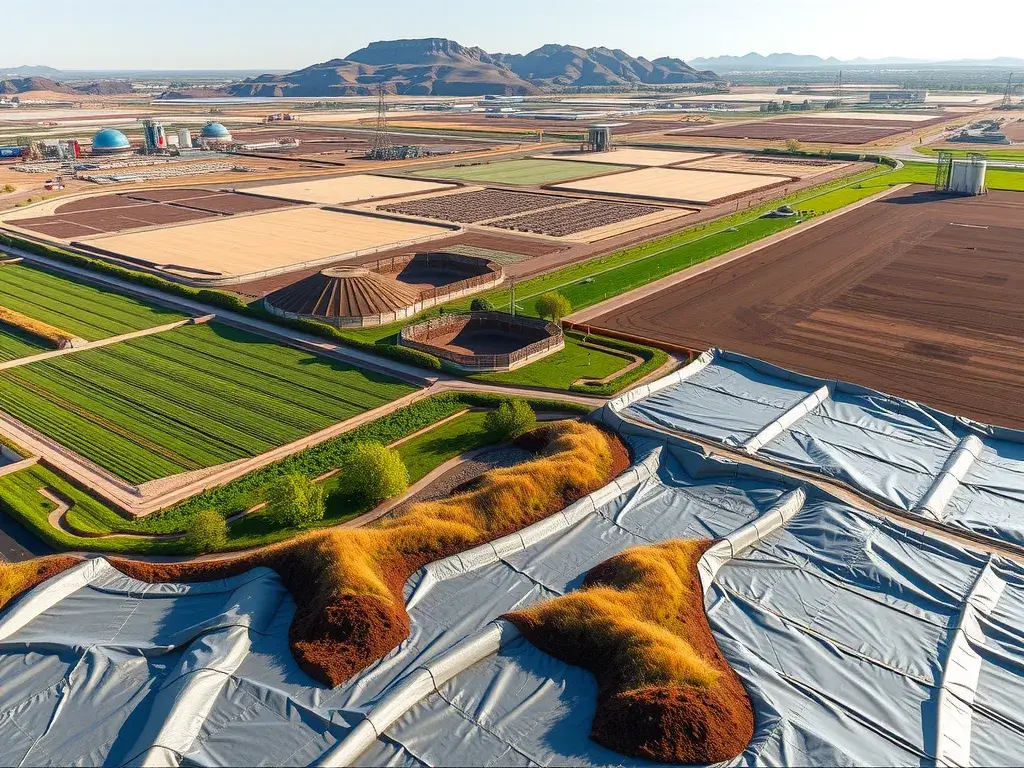
Sustainability Advantages of HDPE and LLDPE Geomembranes in Landfill and Farming Uses
As environmental issues grow, sustainability becomes crucial. Across various sectors, eco‑friendly methods are picking up speed, and geomembranes are at the forefront of this change. High‑Density Polyethylene (HDPE) and Linear Low‑Density Polyethylene (LLDPE) geomembranes, in particular, are highlighted as green options for important uses like landfills and farming. Aligned with circular‑economy goals—prevent waste, protect natural capital, and design for longevity—they keep contaminants contained and conserve water, cutting emissions tied to cleanup and replacement materials and delivering gains that add up over time.
Examining the Environmental Role of Geomembranes
Primarily used as liners in numerous applications, geomembranes are vital in protecting the environment by stopping pollutants from leaking into soil and water sources. Their very low permeability, combined with engineered seams, creates a continuous barrier. HDPE and LLDPE are prized for strength, adaptability, and chemical resistance, making them well‑suited to sustainability goals. They tolerate sunlight and temperature changes, and fusion‑welded seams can be tested to verify integrity. Paired with geotextile cushions or drainage layers, these systems manage liquids efficiently and often avoid the material and carbon burden of thicker mineral or concrete alternatives.
HDPE and LLDPE Geomembranes: Key Players in Landfill Protection
In landfill settings, the main goal is to shield the nearby environment from dangerous leachate. HDPE geomembranes serve as a leak‑proof barrier that effectively traps harmful materials. Their sturdy makeup resists punctures and tears, extending service life and limiting upkeep. LLDPE adds flexibility, helping the liner conform to settlement and uneven subgrades. Most facilities use composite systems with compacted clay or geosynthetic clay liners, drainage layers, and leachate collection piping. HDPE aids slope stability, while LLDPE’s elongation accommodates movement. Robust construction quality assurance—trial seams and vacuum or spark testing—further supports long‑term containment.
Using HDPE and LLDPE liners in landfill processes not only complies with environmental standards but also promotes sustainability by protecting ecosystems from pollution. Their application can greatly lower the risk of environmental harm, aiding a safer, cleaner waste management approach. Many sites pair bottom liners with caps that limit rain infiltration and capture landfill gas for energy, turning containment into emissions reductions. Over a site’s life, durable liners reduce disruptions, ease expansions, and simplify monitoring via leak‑detection zones, joining environmental stewardship with sound economics.
Supporting Agriculture with Geomembranes
Farming sees great benefits from the sustainable use of HDPE and LLDPE geomembranes. These liners are placed in irrigation canals, ponds, and reservoirs to save water—a priceless benefit in dry areas like Saudi Arabia. By reducing seepage, they enhance water‑use efficiency and make farming more sustainable. Lined canals deliver more flow with less pumping, while lined reservoirs store seasonal or reclaimed supplies for peak demand or emergency use. In aquaculture and livestock operations, liners maintain water quality, ease cleaning, and prevent nutrient‑rich effluent from entering groundwater.
Moreover, using geomembranes in farming helps prevent soil erosion and boosts soil management techniques. The materials’ resistance to farming chemicals further increases their usefulness, ensuring they remain effective over multiple planting cycles without altering the soil’s natural quality. By separating liquids from native soils, liners help manage salinity and reduce nitrate migration. Surfaces are easy to clean or patch, keeping systems online. Where evaporation is severe, compatible floating covers can curb water loss. Many projects also recycle liners at end‑of‑life, closing material loops.
Conclusion: Moving Towards Sustainable Methods
The use of HDPE and LLDPE geomembranes in landfills and agriculture shows a practical, measurable path to sustainable progress. With thoughtful design, disciplined installation, and routine monitoring, projects can cut risks, conserve water, and extend asset life—benefits that translate into lower costs and stronger environmental performance over decades.
For more details on adopting sustainable geomembrane solutions, visit our website or contact our experts for case studies, specifications, and project‑specific guidance.