
The Importance of Geomembranes in Enhancing Water Use in Agriculture
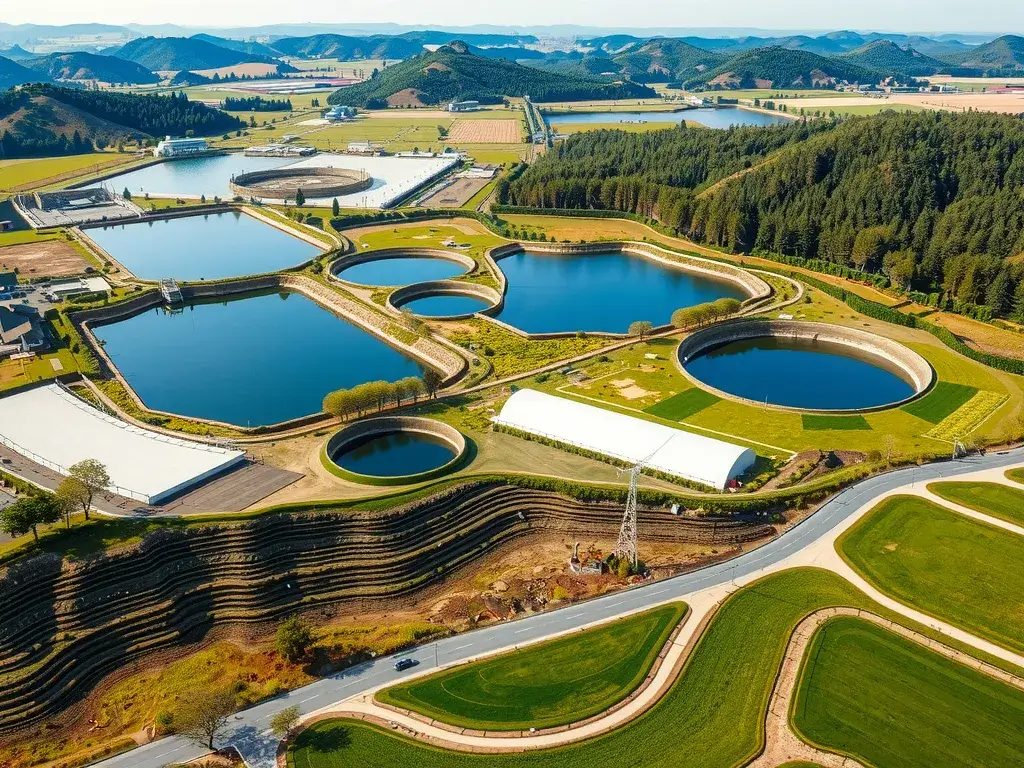
With the world’s population rising, pressure on water grows. Agriculture uses most freshwater, so using it wisely is essential. An increasingly common tool is the geomembrane—an impermeable liner long used in mining and waste facilities and now central to farm water management. As climate swings bring longer droughts and intense storms, farms must store water reliably and deliver it precisely. Traditional earthen canals and unlined ponds leak or evaporate large volumes before water reaches crops. Geomembranes—flexible HDPE, LLDPE, or PVC sheets—form a continuous barrier that blocks those losses. In agriculture they line reservoirs, on‑farm ponds, tailwater pits, and canals, and they shield groundwater beneath fertilizer and compost pads. Supplied in rolls and welded on site, liners conform to irregular shapes and upgrade existing works without full reconstruction. They also help capture storm runoff for later use, bridging dry spells and stabilizing planting decisions.
Boosting Water Conservation with Geomembranes
Geomembranes conserve water by sharply reducing seepage and evaporation in canals, ponds, and reservoirs, so more of every diversion reaches fields.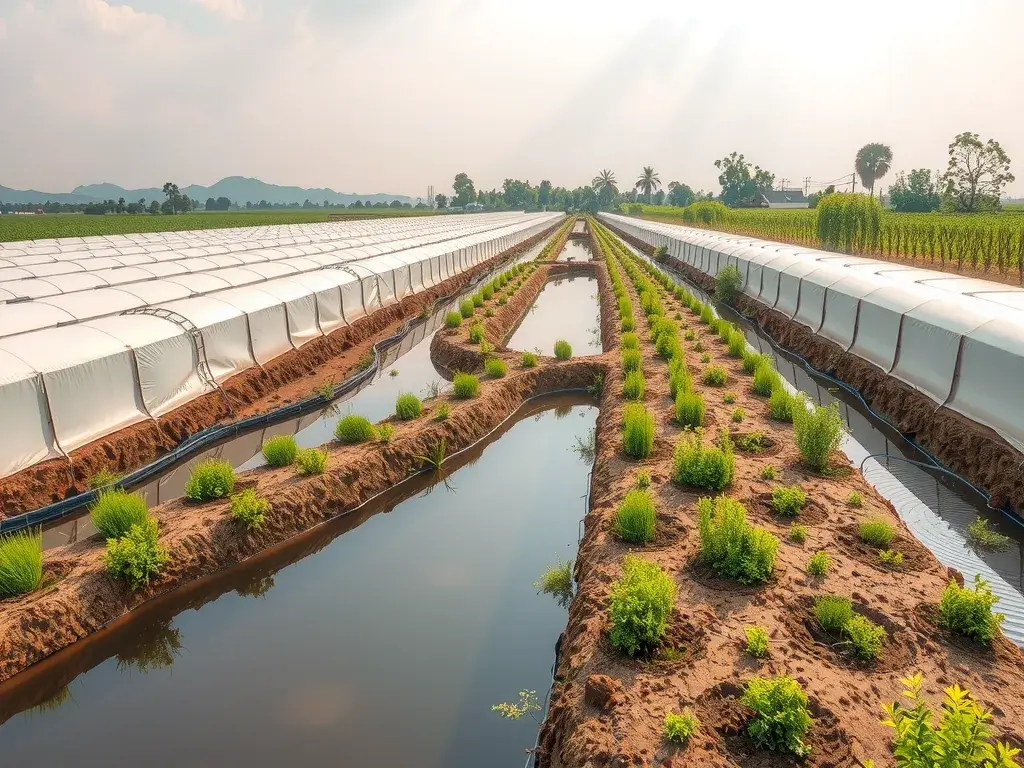 Stable storage levels enable precise irrigation scheduling. Lined canals move higher flows with less head loss; lined ponds can be deeper and steeper, shrinking surface area relative to volume and further limiting evaporation. Because water stays put, dissolved nutrients remain available for reuse instead of leaching into subsoils, trimming fertilizer costs and protecting aquifers. Many farms pair lined storage with pump‑back recovery, filtration, and drip or microsprinklers so each captured gallon can be reapplied at the right time and rate. With telemetry on gates and flow meters, managers can match deliveries to crop demand almost in real time.
Major Benefits of Geomembranes in Farming
A major benefit of geomembranes is durability across tough environments. Modern liners are UV‑stabilized and resist punctures, chemicals, and microbial attack, yet remain workable in the field. Choices range from robust HDPE for large reservoirs to more flexible LLDPE or PVC for complex shapes and retrofits. Installation is straightforward: prepare the subgrade, add a protective geotextile where needed, unroll panels, thermally weld seams, and test for leaks.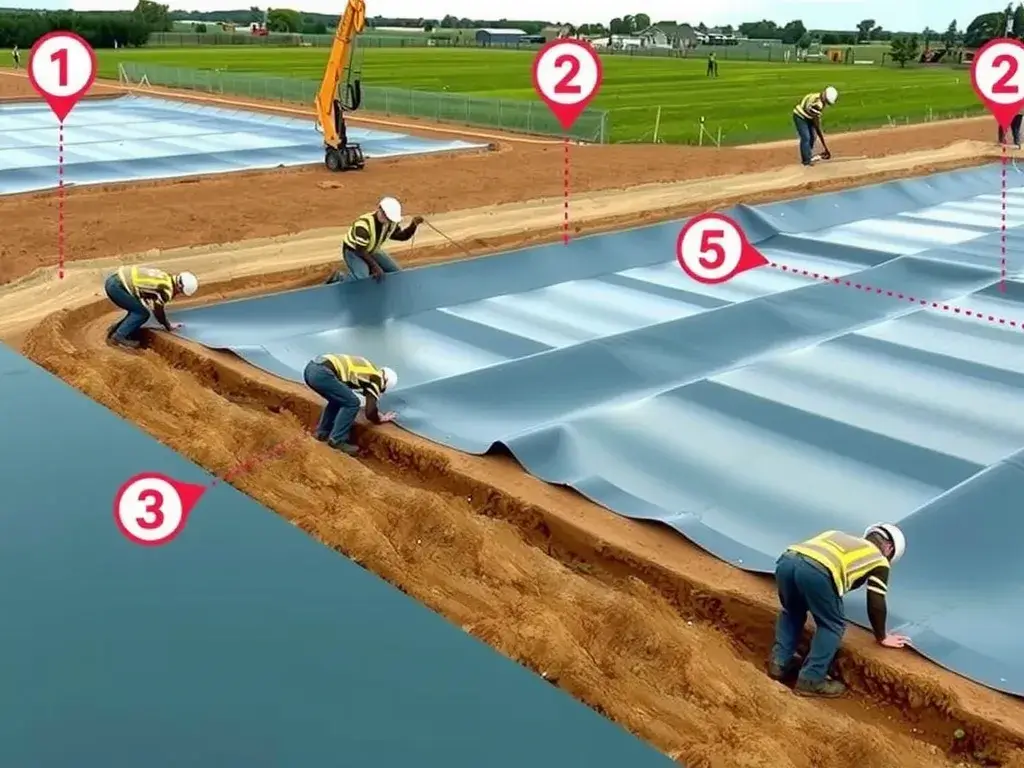 Common quality‑assurance steps include air‑channel or vacuum‑box testing of seams and spark testing for conductive liners. Lined facilities also cut maintenance by limiting siltation, burrowing‑animal damage, and vegetation along canals. Financial returns accrue through lower pumping hours, fewer emergency repairs, more reliable deliveries, and steadier yields in dry years—making liners a scalable upgrade for farms of any size.
Example: Geomembrane Use in Saudi Arabia
Saudi Arabia’s arid climate underscores these advantages, often supported by government programs. By lining storage and conveyance, farms have cut water losses and raised yields; many report savings approaching 25%, a crucial gain where water comes from deep aquifers or desalination. Lined basins near center‑pivot fields curb seepage in sandy soils and let irrigation be scheduled at night when evaporation is lowest. Heat‑tolerant HDPE and secure anchoring stand up to extreme temperatures and wind‑blown sand. Beyond water savings, growers see steadier pressure in drip lines, fewer canal breaches, and better salinity control in date palms and greenhouse vegetables. Building local capacity to weld and test seams has lowered installation costs and improved long‑term service.
Final Thoughts: Sustainable Farming with Geomembranes
In short, geomembranes are a practical, cost‑effective way to use water wisely and farm more sustainably.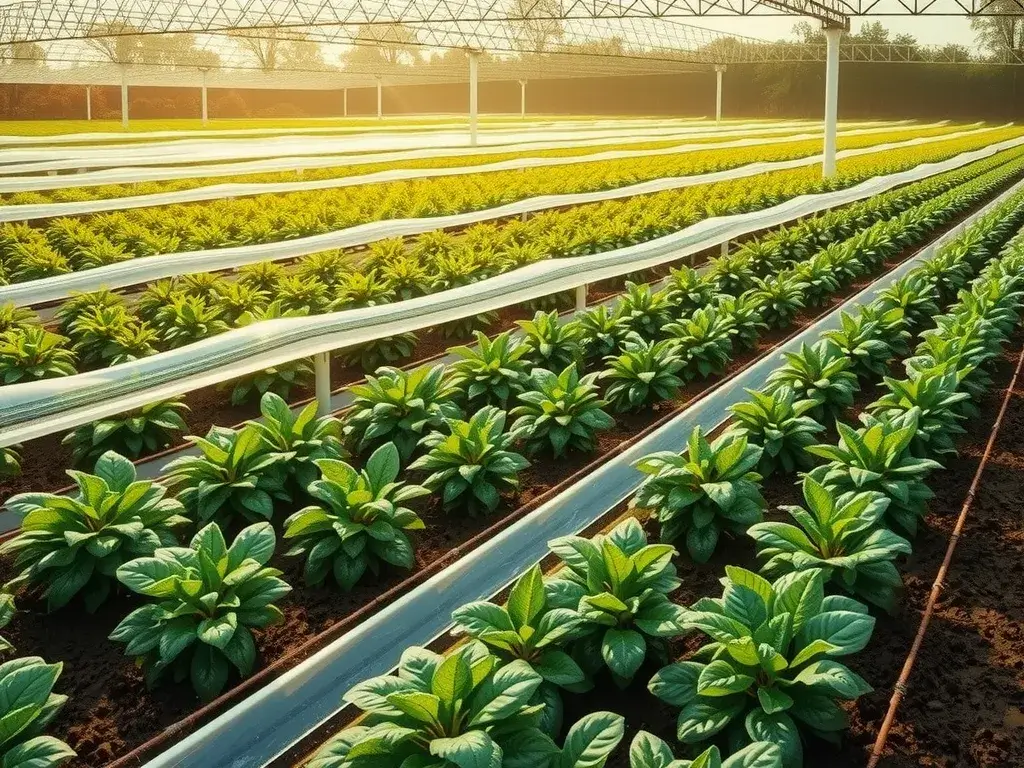 Paired with soil‑moisture sensors, automated valves, and drip or sprinkler systems, liners become the backbone of high‑efficiency irrigation. Success depends on good design and care: choose the right resin and thickness, protect against punctures with geotextiles, and schedule inspections to catch wear early. End‑of‑life planning matters, and many suppliers now offer recycling. Thoughtful incentives—cost‑share grants or performance‑based rebates tied to verified savings—can speed adoption, helping agriculture stretch limited supplies while safeguarding soils and aquifers.