
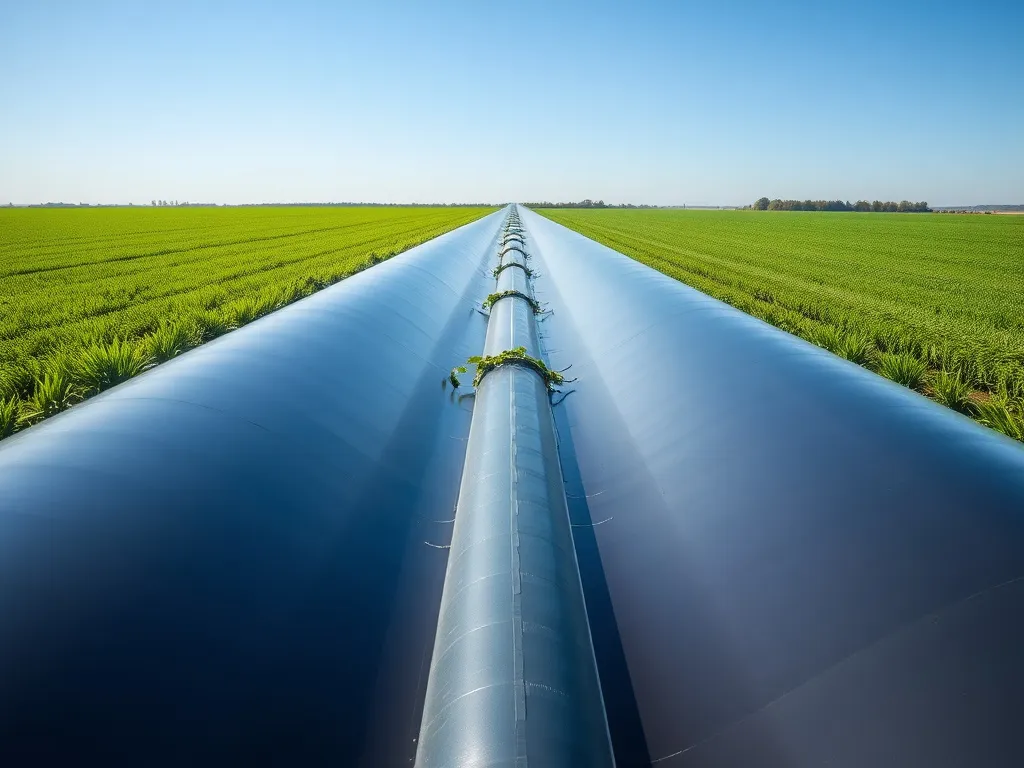
Canal Lining with HDPE Geomembranes: Minimizing Water Loss in Irrigation Projects
Irrigation underpins agricultural yields, yet canals often lose 20–40% of diverted water—more in arid climates—before it reaches fields. High-Density Polyethylene (HDPE) geomembrane linings offer a practical upgrade: they curb seepage, stabilize banks, smooth hydraulics, and reduce pumping demands. By conserving scarce supplies and improving delivery reliability, geomembranes bolster climate resilience and help farmers sustain production through erratic rains and drought. They are cost-effective, scalable, and can be phased to suit budgets and local priorities, turning existing canals into efficient, dependable conveyance systems.
Understanding Water Loss in Irrigation Canals
Losses in canals stem mainly from seepage, evaporation, and operational leakage. Unlined earthen canals percolate water through beds and side slopes via hydraulic gradients, cracks, burrows, roots, and variable soil layers. Evaporation is pronounced in shallow, wide reaches exposed to heat and wind. Overtopping, leaky structures, and unauthorized off-takes add to inefficiency. Seepage can also cause waterlogging and salinization nearby, degrading soils and yields. As demand rises, conserving conveyance water becomes essential to meet crop needs while cutting energy use and greenhouse emissions tied to excessive pumping and transfers.
The Role of HDPE Geomembranes
HDPE geomembranes form an impermeable barrier that sharply reduces canal seepage. Manufactured in ~0.75–2.5 mm thicknesses and stabilized with carbon black and antioxidants, they resist UV and thermal aging across diverse climates. Smooth or textured surfaces let designers balance low hydraulic roughness with slope stability, and geotextile underlayment cushions against subgrade irregularities. Properly installed, HDPE conforms to the canal prism, protects the subgrade, and lowers maintenance. The inert, non-toxic material preserves water quality for irrigation and livestock use.
- Durability: HDPE resists UV and extreme temperatures; 2–3% carbon black shields against sunlight while antioxidants slow oxidation. High stress crack resistance allows long-term loading and minor settlements without brittle failure. With appropriate thickness and protective cover, service life commonly exceeds two decades, extended further by routine inspections.
- Chemical Resistance: The liner withstands fertilizers, saline/brackish water, and typical pesticide/herbicide concentrations across broad pH ranges. This stability limits degradation and unplanned shutdowns, sustaining consistent deliveries throughout the growing season.
- Ease of Installation: Large factory panels deploy quickly; field seams are welded into continuous, watertight barriers. Compared to concrete, geomembranes need less equipment, no curing, and better accommodate irregular geometries and tight schedules, enabling rapid lining during off-peak periods.
Case Study: HDPE Geomembrane Implementation in Saudi Arabia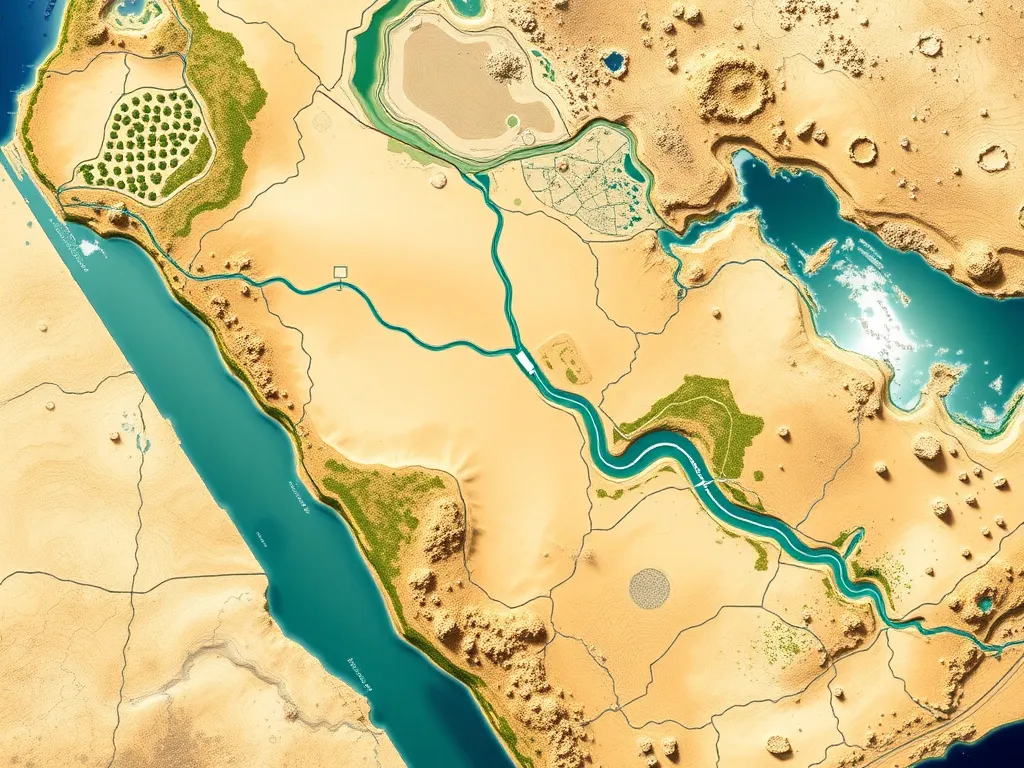
In Saudi Arabia’s Al-Kharj region, pre-lining assessments showed 30–45% losses along sandy reaches. After HDPE installation, seepage-related losses fell by 70–85%, saving thousands of cubic meters daily in peak periods. Farmers reported more reliable deliveries, higher cropping intensity, and shifts to higher-value crops. Weed growth declined, sediment ingress dropped, and pumping energy decreased. With a 3–5 year payback driven by avoided losses and reduced maintenance, the project proved both technically robust and financially compelling in a water-scarce setting.
Steps to Implement HDPE Geomembranes in Canal Lining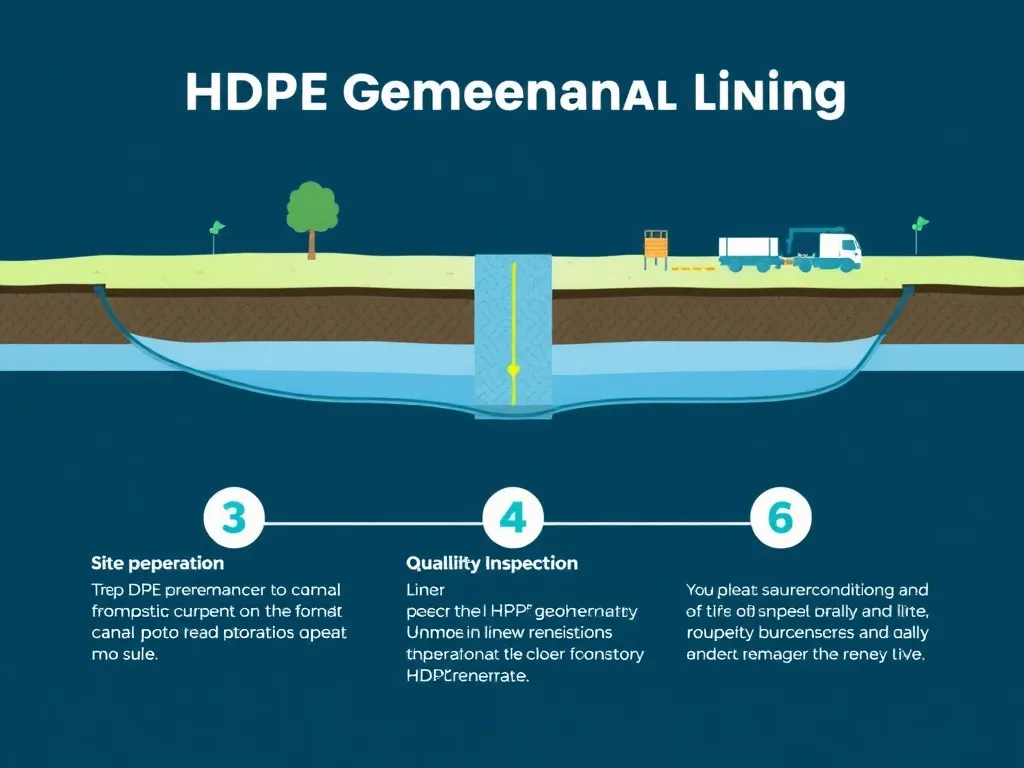
- Site Preparation: Clear vegetation and debris; grade, moisture-condition, and compact the subgrade. Install geotextile cushioning where needed and excavate anchor trenches along the crest. Smooth transitions near structures and plan protective cover (soil or light riprap) to shield the liner from UV, traffic, and debris.
- Liner Placement: Unroll panels per a layout plan that minimizes seams in high-stress zones and aligns overlaps with flow. Use proper handling to avoid damage and schedule work during low wind and moderate temperatures. Allow thermal relaxation before seaming; verify textured liner orientation and contact on slopes.
- Seaming and Welding: Join panels by hot wedge or extrusion welding. Dual-track wedge welds enable air channel pressure tests; extrusion is suited to patches and details. Clean overlaps, make test seams each shift to confirm temperature, speed, and pressure, and maintain typical overlaps of 100–150 mm.
- Quality Inspection: Perform non-destructive seam testing (vacuum box, air channel), visual checks for wrinkles and damage, and scheduled destructive tests for peel and shear strength, repairing and re-testing as needed. Document panel maps, seam tests, and repairs; verify terminations, then ballast or cover the liner before commissioning.
Analyzing Benefits of HDPE Geomembranes in Canal Lining
HDPE lining delivers more than water savings: smoother hydraulics reduce friction losses; stable banks lower breach risk; and reliable deliveries help farmers time irrigation precisely. Lined conveyance also enables broader adoption of drip and sprinkler systems, raising water productivity and supporting food security and rural livelihoods.
| Benefit | Explanation |
|---|---|
| Water Conservation | Seepage and evaporation decline sharply, often cutting conveyance losses by 50–90%. Freed water can expand irrigated area, stabilize late-season supplies, or support environmental flows. Reduced seepage also limits waterlogging and salinization, protecting soil structure and fertility. |
| Cost Efficiency | While capital costs exist, life-cycle savings from avoided losses, less desilting, fewer bank repairs, and shorter shutdowns often repay investments within a few seasons. Lower over-delivery reduces energy use for pumping and cuts ongoing operating expenses. |
| Environmental Impact | Conserved surface water eases pressure on aquifers, slowing groundwater declines and supporting wetlands. Relative to concrete, geomembranes often carry lower embodied carbon and avoid extensive aggregate quarrying. With thoughtful design, lined canals can accommodate wildlife access and, at end of life, HDPE can be removed and potentially recycled. |
Challenges and Considerations in HDPE Geomembrane Use
Success depends on skilled installation and careful design. Poor subgrade preparation can cause punctures; temperature swings may induce wrinkles; wind uplift threatens uncovered liners. Protective cover, fencing, or riprap may be needed where livestock or foot traffic is common. Designers should provide gas relief beneath liners and robust terminations at structures. Procure to recognized standards and enforce rigorous QA/QC so the liner performs reliably over its service life.
Cultural and Environmental Factors
Projects work best when aligned with local practices. Engage water user associations, train local crews, and define maintenance roles to build ownership. Where canal seepage supports shallow wells, consider managed aquifer recharge or alternative structures to offset reduced recharge. Plan wildlife access, safe crossings, erosion control at outlets, and upstream sediment management. Communicate expected savings, allocation rules, and scheduling changes to ensure trust and equitable benefits.
Comparative Analysis: HDPE vs. Traditional Liners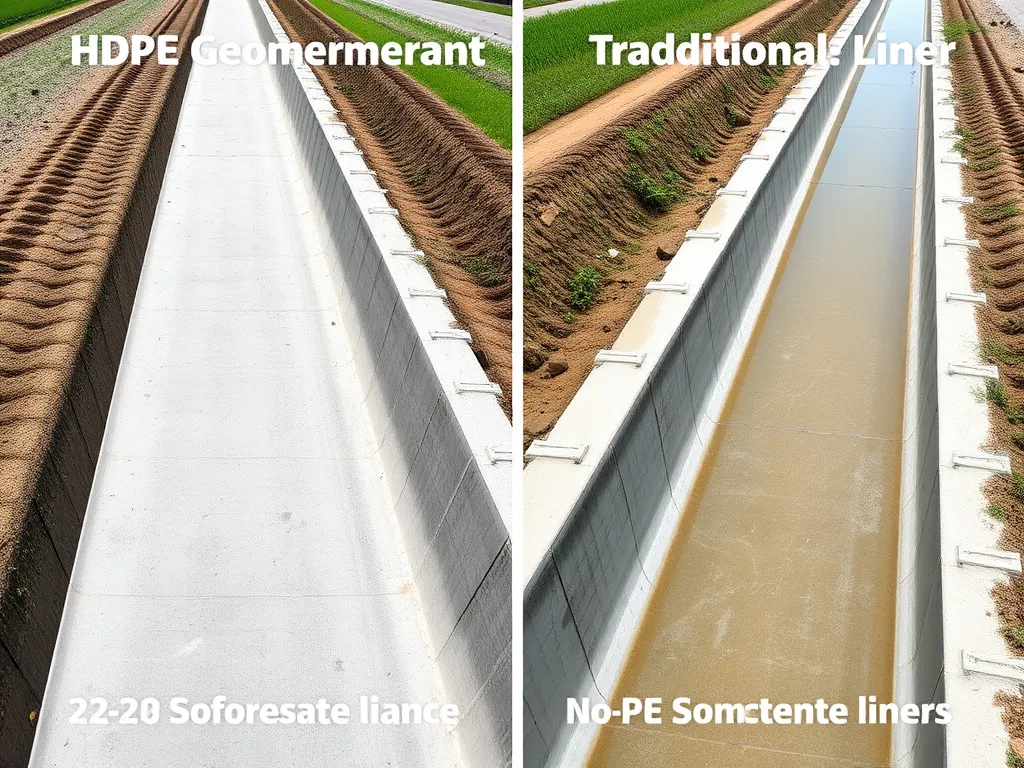
Compared with concrete or compacted clay, HDPE combines low permeability, adaptability to variable subgrades, quick installation, and lower routine maintenance. Concrete is durable but costly, carbon-intensive, and prone to cracking and joint leakage where soils settle or temperatures fluctuate; repairs disrupt operations. Clay can be economical with suitable borrow, yet it desiccates and cracks in arid climates and depends on precise moisture and compaction. Hybrid solutions—geomembrane plus thin shotcrete or precast in high-traffic zones, textured HDPE on side slopes with gabions near structures—can target local needs. Selection should weigh life-cycle cost, carbon footprint, constructability, and operational demands.
“HDPE geomembranes represent a leap in sustainable irrigation, cutting losses, stabilizing delivery, and lowering maintenance to strengthen both farms and the water systems communities rely on.” — Industry Expert
Conclusion: HDPE Geomembranes Empowering Sustainable Irrigation
HDPE canal linings offer a durable, flexible, and secure way to curb water loss and lift irrigation performance. Strong projects pair sound engineering—fit-for-purpose thickness, geotextile cushioning, anchored terminations, and robust QA/QC—with clear operations and maintenance: routine inspections, debris control, and timely repairs. Referencing established standards and training local teams helps ensure consistent performance and long service life. Integrated into broader water management, geomembranes become a practical pillar of climate adaptation in agriculture.
Future irrigation investments—especially in dry and semi-dry regions—can multiply benefits by pairing lined canals with modern flow controls, automated gates, and on-farm micro-irrigation. Digital tools for loss detection and water accounting improve transparency and decisions. Financing that recognizes life-cycle savings and the social value of conserved water can speed adoption, while end-of-life recycling strengthens circularity. From Saudi Arabia to North Africa, South Asia, and the western United States, the growing record of HDPE-lined canals shows that, when tailored to local context and installed with quality, geomembranes provide a reliable, scalable path to deliver more crop per drop and build resilient rural economies.